
Herbs & Spices · Buyer guide
Peruvian Dried Oregano Wholesale: Buyer's Guide to Quality, Packaging & Import Requirements
Peru is a recognized origin for dried oregano in international spice trade. For an importer, the commercial outcome depends less on the origin name and more on how precisely the specification, documents and delivery terms are defined before a supplier is asked to quote.
Author: XTO GROUP INC — Editorial & Sourcing Team · Published · 6 min read
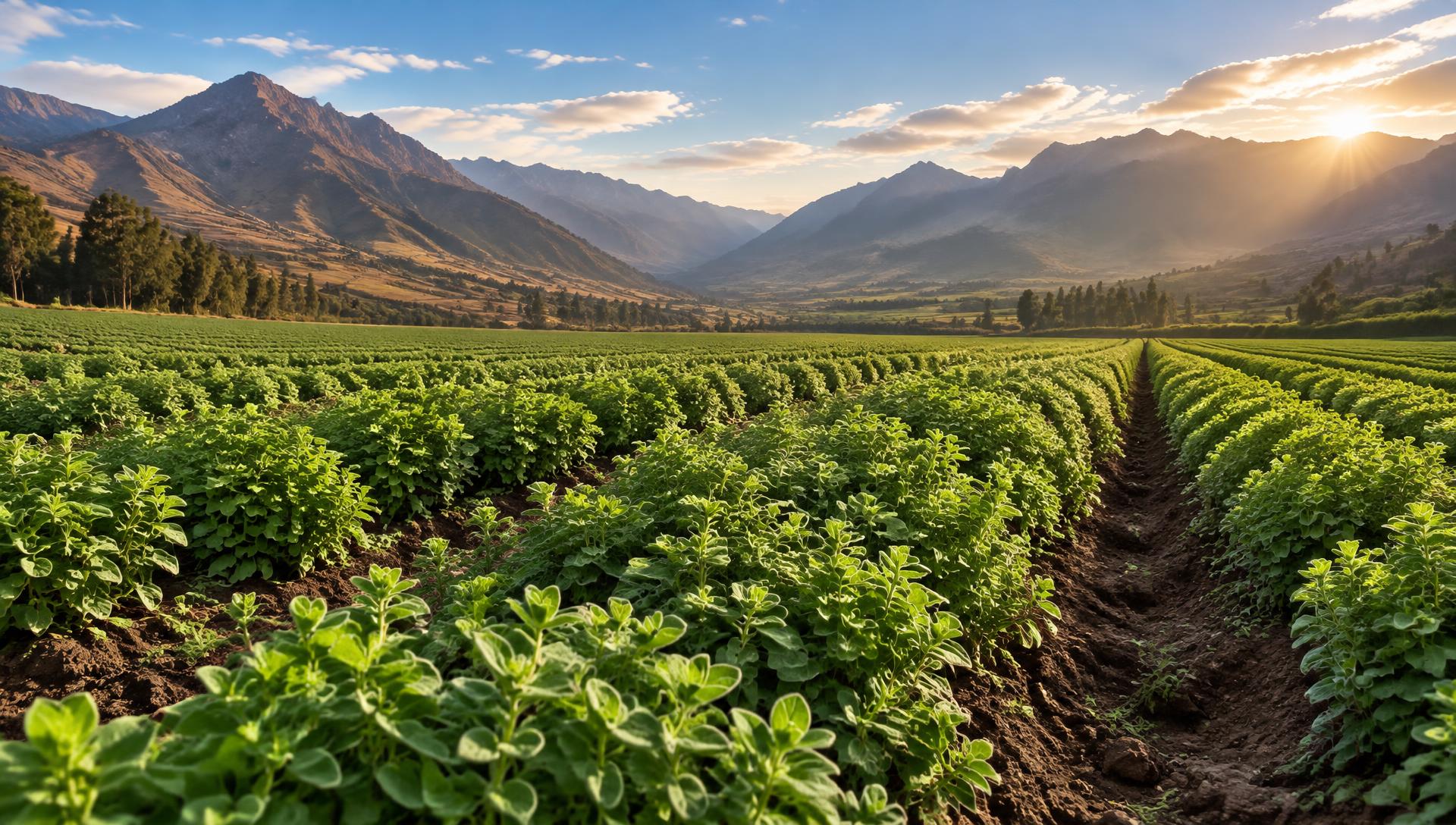
Illustrative AI-generated image of an oregano field in Peru — not a supplier field or lot.
Why buyers look at Peru for dried oregano
Peruvian oregano is traded mainly as a dried leaf product for food manufacturers, spice packers, foodservice distributors and private-label brands. Buyers typically evaluate aroma intensity, leaf colour, cleanliness and consistency between lots.
Origin alone does not define quality. Two Peruvian lots can differ in species, harvest timing, drying practice and cleaning, so every program should start from a written specification rather than a country label.
Cultivation and drying: what to ask, not assume
Oregano is a perennial herb harvested by cutting the aerial parts of the plant, which are then dried, threshed to separate leaves from stems, sieved and cleaned. Each of these steps influences moisture, colour, stem content and foreign matter in the final product.
Ask the supplier to describe — for the specific lot offered — how the material was dried and cleaned, and which controls exist between field and packing. The images in this article are illustrative and do not show any supplier's field, plant or lot.
Whole leaf vs cut vs ground: grades and quality factors
Grade names vary by supplier and market, so treat them as labels that must be backed by measurable parameters.
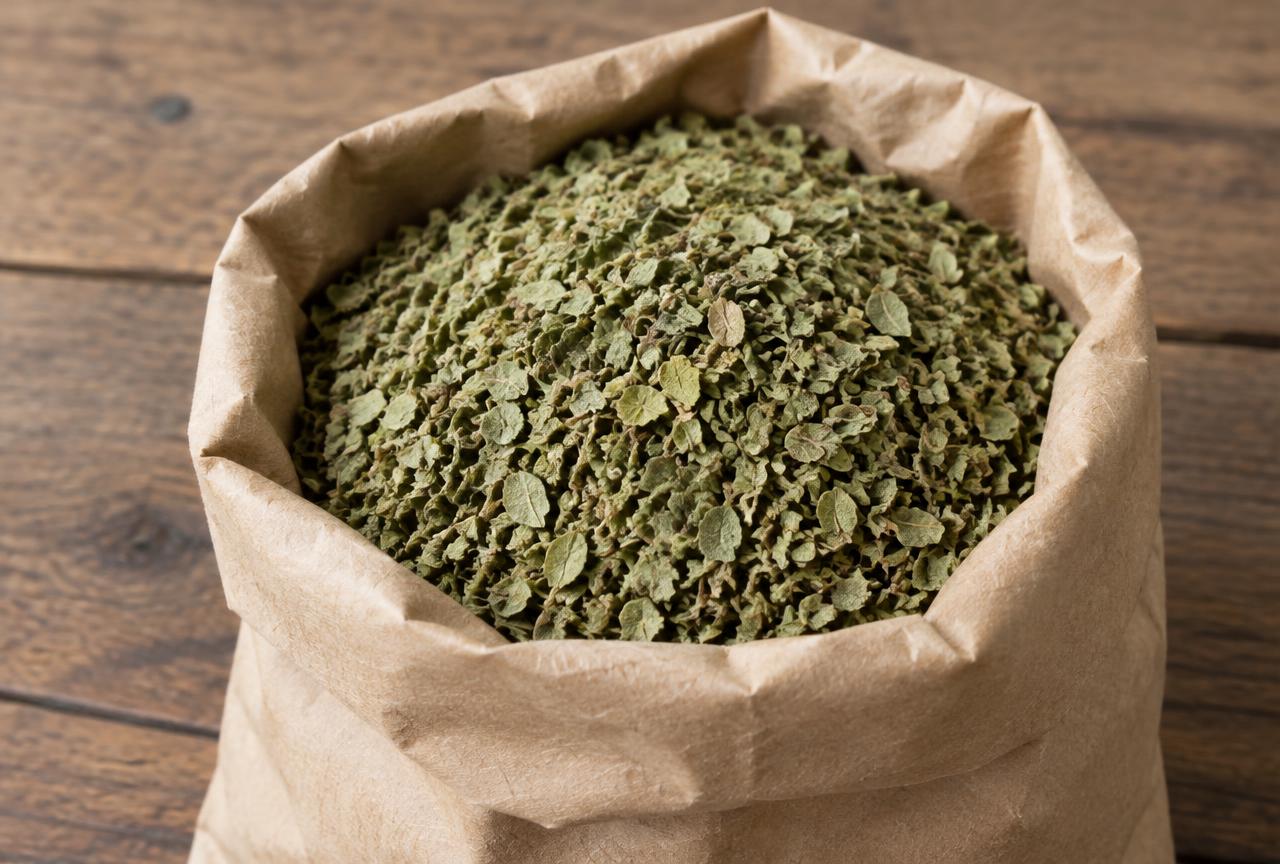
Whole / leaf
Larger leaf pieces, usually preferred by packers and buyers who re-process. Ask for particle size range and stem tolerance.
Cut / rubbed
Sieved to a defined mesh for retail jars, seasoning blends and foodservice. Specify the mesh or particle size you require.
Ground / powder
Milled product for industrial seasoning. Grinding can be done at origin or destination; confirm who controls it.
- Botanical species declared on the specification (oregano is traded under more than one species).
- Visual colour and aroma expectations, ideally against an approved reference sample.
- Stem content and foreign or extraneous matter tolerance agreed in writing.
- Moisture and volatile oil content, with the test method stated.
How to request a specification sheet and COA
A useful specification sheet describes the product; a certificate of analysis (COA) reports results for a specific lot. Ask for both, and make sure the lot number on the COA matches the lot quoted.
XTO does not publish numeric limits here because acceptable values depend on your market, your customer and applicable regulation. Agree the parameters and methods with your quality team, then send them with the RFQ.
- Species, cut and particle size.
- Purity / extraneous matter and stem content.
- Moisture and, if relevant, volatile oil.
- Microbiological results required by your market.
- Pesticide residue results against the regulation of the destination country.
- Traceability: lot code, processing and packing date, and origin documentation.
Packaging, samples and lot planning
Bulk oregano is commonly packed in lined bags or cartons, but the format, net weight and labelling must match your warehouse, your customer and the destination's labelling rules. State them in the RFQ.
Ask for a pre-shipment or representative sample before confirming volume, and keep a retained reference sample from the approved lot. Sample availability, courier cost and timing are confirmed case by case.
If you need recurring shipments, describe the first order and the expected monthly or seasonal volume separately so suppliers can say honestly what they can commit to.
Export and import requirements depend on the destination
In Peru, SENASA is the authority for phytosanitary certification of plant-origin exports, and it publishes a tool to consult sanitary and phytosanitary requirements by destination country. Whether a phytosanitary certificate or other document applies depends on the product, its processing and the importing country.
On the import side, your customs broker and food-safety authority define registration, labelling, prior notice and inspection requirements. Confirm them before contracting; this guide does not state that any certificate has been issued for any lot.
Selecting and qualifying suppliers
Qualify suppliers on evidence: company identity, export history, documents for the lot offered, sample consistency and responsiveness to specification questions.
- Verify the legal entity and the person you deal with.
- Ask which documents they can provide for the specific lot and destination.
- Request references or prior shipment documentation where appropriate.
- Compare the sample against your specification before negotiating price.
- Agree payment structure through banking channels; XTO does not lend or approve credit.
What you need to compare FOB and CIF costs
Incoterms® rules, published by the ICC, define who handles and pays each part of delivery. A FOB offer and a CIF offer are not comparable until freight, insurance and destination costs are added to the FOB figure on the same basis.
Before comparing, align quantity, packing, net weight, cut, documents, loading port, destination port, shipment window and payment terms. Any difference changes the real landed cost.
Tacna oregano market reference — October 2026
Two recent sales in Tacna, in southern Peru, give buyers some context on prices paid to producers. They are one-off domestic transactions reported by Peruvian sources. They are not FOB or CIF prices, not current export quotes, not XTO inventory and not a promise of price or margin.
Reference 1 — In a release dated 7 October 2026, Agromercado (MIDAGRI) reported that two Tacna producer associations sold 11,216 kg of dehydrated oregano at S/12 per kg, for a total of S/134,592. Of that volume, 4,900 kg was bought by PROVEX (Productos Vegetales de Exportación E.I.R.L.), a Tacna-based trading company.
Reference 2 — Revista Lombriz reported on 20 October 2026 that Tacna farmers sold 5.4 tonnes of oregano for S/75,600, or S/14 per kg, to a local buyer, with the product to be marketed through PROVEX for possible export to Argentina. The report describes a local sale linked to a possible export; we found no public record that the shipment was actually exported.
Moving from S/12 to S/14 per kg is an increase of about 16.7% between these two specific sales. It does not show a general market trend, and the figures do not cover grade, moisture, cleaning, packing, export documents, freight or insurance.
Use these references to frame questions, not to set a price. Any offer XTO coordinates depends on the supplier confirming the lot, specification and terms.
RFQ checklist for dried oregano
Send these points in the buyer form so suppliers can respond with comparable offers.
- 01Product and cut: whole leaf, cut/rubbed or ground; particle size.
- 02Botanical species required, if your market specifies it.
- 03Quality parameters and test methods (moisture, purity, microbiology, pesticide residues).
- 04Packaging format, net weight and labelling language.
- 05First-order quantity and expected recurring volume.
- 06Destination country and port; preferred Incoterm.
- 07Documents required for your market.
- 08Target shipment window and sample request.
Frequently asked questions
Does XTO hold oregano stock?
No. XTO GROUP INC coordinates sourcing with qualified suppliers. Availability, lots and timing are confirmed by the supplier for each requirement.
Can I get a price from this guide?
No price is published. Offers depend on cut, specification, quantity, packing, Incoterm, destination and the supplier's lot confirmation.
Is the oregano organic or certified?
This guide makes no organic or certification claim. If your program requires a certification, state it in the RFQ and it will be verified per supplier and lot.
Which documents will be needed for export?
It depends on the destination country and product. SENASA publishes requirements by country for Peruvian exports; your import authority defines the rest.
Can I request a sample first?
Yes, you can request one. Sample availability, cost and courier timing are confirmed case by case with the supplier.
Official references
Applicability depends on the country and product; these links do not mean any certificate has been issued.
Ready to send a dried oregano requirement?
Send your specification through the buyer form. XTO reviews it and coordinates with qualified suppliers; producers and exporters can submit their offer through the supplier form.
Contact XTO GROUP INC
Author: XTO GROUP INC — Editorial & Sourcing Team. Educational content for B2B buyers. XTO GROUP INC does not manufacture, hold inventory or guarantee availability, prices, volumes or certificates.
Are you a producer of this product? Present it to XTO.
Commercial opportunities are subject to verification and buyer requirements. No sales are guaranteed.
Commercial contact
XTO GROUP INC
Send your specification, destination and Incoterm; XTO reviews each requirement with qualified suppliers, subject to confirmation.
Request Quote- Email: joseg@xtogroupinc.com
- Phone / WhatsApp: +1 (786) 236-8369 · WhatsApp
- Website: www.xtogrup.com