
1. Define the purchasing program before requesting a price
State how the quinoa will be used: ingredient manufacturing, repacking, distribution or another buyer-defined program. Describe whether you require raw dry grain, a particular cleaning or processing step, and a single variety or blend. A proposal for one specification is not automatically comparable with another, even when both are described as bulk quinoa.
Separate the initial order from your estimated monthly requirement. A forecast helps suppliers assess a program; it is not a purchase commitment or proof of capacity. Ask for a proposed minimum order, sample arrangements and lead time for the exact requirement. Confirm the proposed supplier, documentary Peruvian origin and lot traceability before relying on an offer.
XTO GROUP INC coordinates international sourcing and trade requirements. It does not manufacture quinoa, own inventory, sell it wholesale, act as a direct exporter or operate freight or warehouses. Commercial quotations and lead times remain subject to qualified supplier and lot verification.
2. Specify the variety or blend—not just the colour
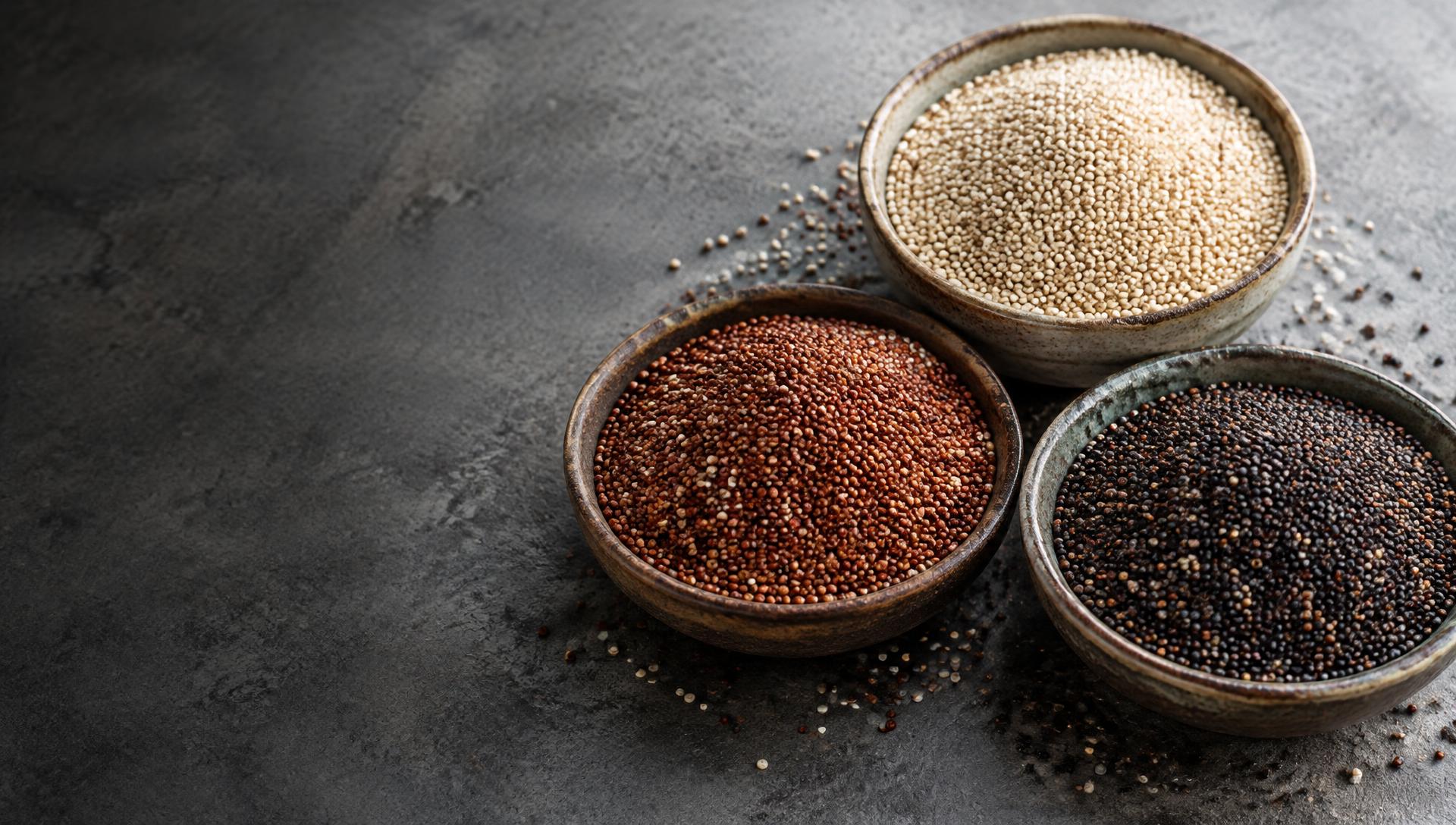
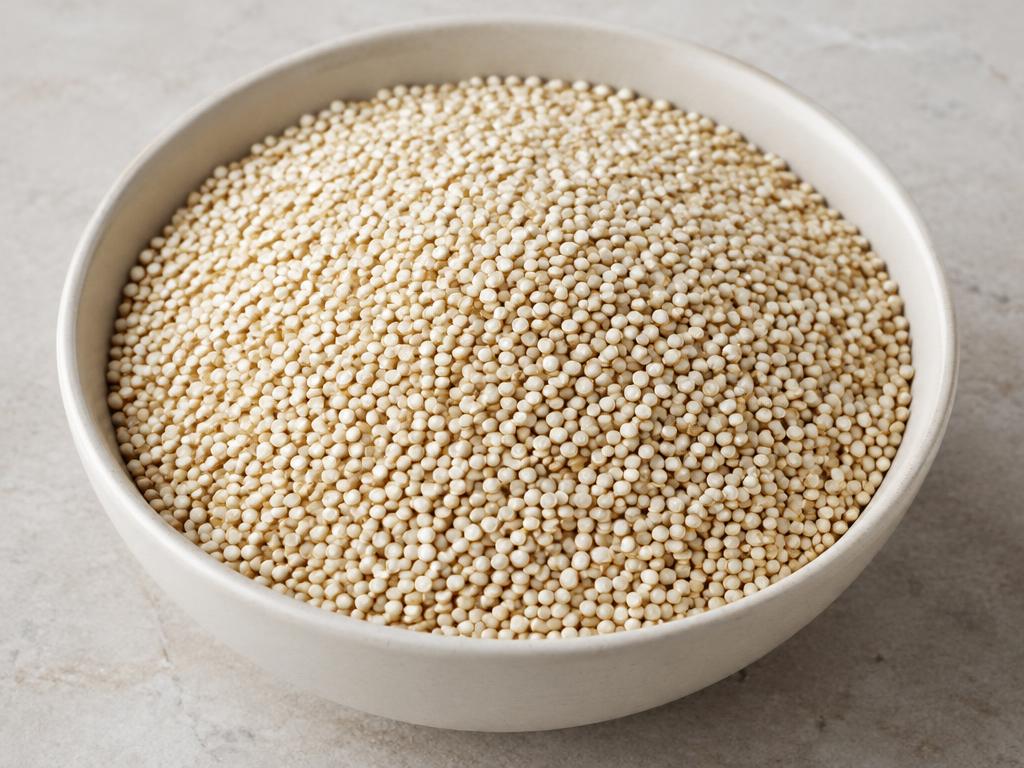
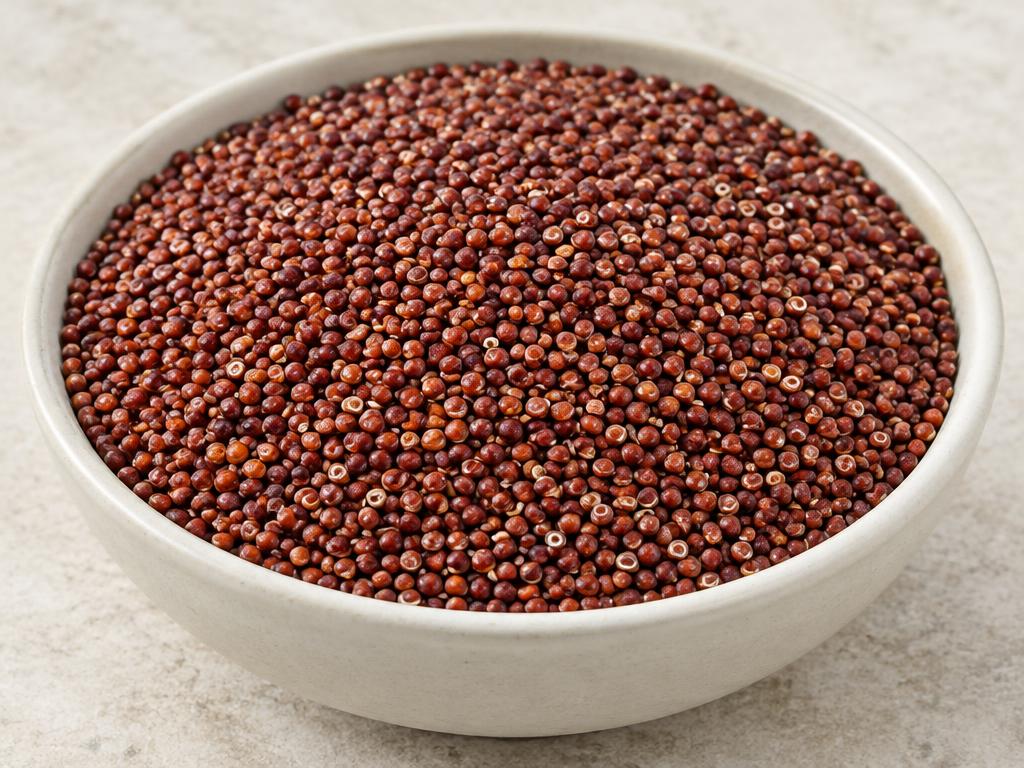
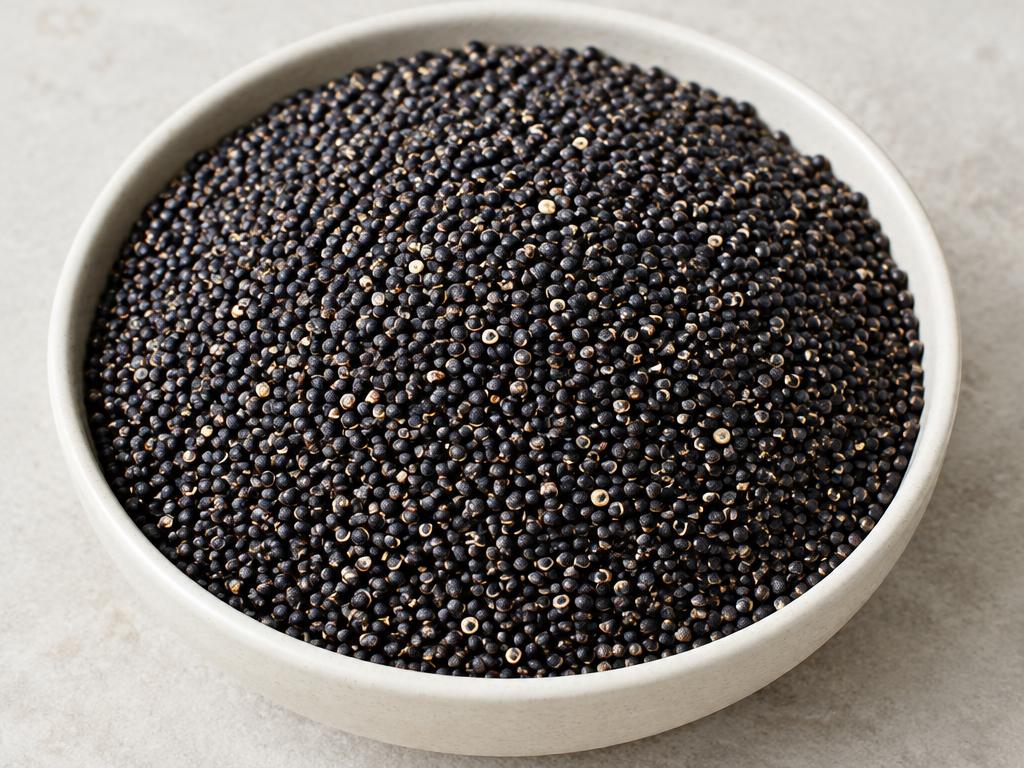
White quinoa is represented here by ivory-coloured dry grains, red quinoa by reddish grains and black quinoa by dark grains. These references help communicate a category, but photographs do not establish variety identity, uniformity, processing status or acceptance of a proposed lot. Use supplier documentation and representative samples to assess the actual material.
For a blend, state the proportion required for each variety and how the proportions will be checked. Agree whether the supplier provides a finished blend or separate varieties for the buyer to combine. Identify acceptable colour variation and substitution rules in writing; do not assume varieties can be interchanged without approval.
The three categories shown are not a stock list. No simultaneous availability, specific quantity or particular supplier lot is represented. Availability of every variety and blend must be confirmed separately.
White, red and black: category references
3. Ask how cleaning and saponin removal are evidenced
Ask the supplier to explain cleaning, sorting and any saponin-removal process applied to the offered grain. Request the process description, the processing site and the evidence used to assess the result. Do not infer that quinoa has been washed or otherwise treated from a product name or a polished photograph.
Define the required finished condition and agree how residual saponins will be evaluated where this is relevant to your program. If laboratory analysis or a sensory assessment is required, specify the method, sampling approach and acceptance process with qualified technical personnel. This guide supplies no universal saponin limit and makes no claim about a supplier’s process.
Discuss how processing, drying and subsequent handling relate to the buyer’s moisture specification and packaging requirements. Ask whether a sample represents the same processing route as the proposed commercial lot. A sample from a different batch should not silently become evidence for the shipment.
4. Set measurable quality and food-safety requirements
Write the required moisture, purity and foreign-matter criteria, units and test methods. Clarify whether limits cover damaged grains, other seeds or other buyer-defined defects. Agree how sampling, testing and rejection will work. Do not copy numerical limits from an unrelated market or treat an indicative specification as a verified result.
Request a lot-linked certificate of analysis (COA) and relevant laboratory reports. Check the supplier and lot identifiers, sampling and analysis dates, methods, laboratory identity and the scope of each result. A generic product sheet describes an intended specification; it does not demonstrate that a particular lot complies.
Microbiology, pesticide residues and other food-safety requirements should be defined for the destination and intended use with the buyer’s qualified quality or regulatory team. Specify the required panel and acceptance criteria before requesting tests. Review applicable food-safety documents for scope, validity and issuing body; a logo or an undated certificate is not verification.
5. Connect samples, organic requests and traceability
Agree sample quantity, dispatch arrangements, assessment steps and responsibility for sample costs before shipment. Record the sample identity and its relationship to a proposed lot. When a preliminary sample is only illustrative, require confirmation of the commercial lot before approval. Keep the acceptance decision and any exceptions documented.
State whether the requirement is conventional or organic. No organic status is asserted by this article or the category page. An organic request requires verification of an applicable certificate, its scope and validity, the certified parties and the specific lot and transaction documentation required by the destination.
Traceability should connect supplier identity, origin evidence, processing information and lot identifiers across the proposal, sample, COA and shipment documents. Resolve inconsistent names or lot numbers before proceeding. Qualification is a review process, not a guarantee of quality, certification or supply.
6. Align packaging, volume and delivery planning
Specify bulk packaging format, net weight per bag, any liner requirement, pallet arrangement and label language. Ask which packaging is actually proposed, whether it is appropriate for the intended food use and which information will appear on each unit. Packaging examples are not confirmation of supplier capability.
Provide estimated initial and monthly tonnage, destination country and port, and the target date. Ask for an itemised commercial proposal that identifies the confirmed specification, offered quantity, packaging, quote validity, payment conditions and proposed lead time. Compare like-for-like terms; the lowest headline price may refer to a different processing or delivery scope.
Storage and handling requirements should be agreed with the supplier and the buyer’s technical team for the specific product and packaging. Do not assume an unspecified shelf life, ready stock, freight inclusion or immediate shipment. A quotation or an RFQ is not a confirmed sale.
7. Agree the collection point, Incoterm and documents
Buyer-arranged and buyer-paid transport may be an option only subject to an agreed collection point and Incoterm. Specify the named place or port and the agreed Incoterms edition, and identify who arranges and pays for each relevant step. Collection alone does not establish FOB, export clearance obligations, insurance or a transfer of risk.
Resolve loading, export and import formalities, transport booking, insurance where applicable, document delivery and risk allocation before commitment. Check that the chosen term fits the actual transport arrangement with qualified trade advisers. XTO coordinates requirements; it does not own or operate freight services.
Depending on destination and processing, the document set may include commercial invoice, packing list, certificate of origin, transport documents, COA and laboratory reports, and phytosanitary or organic transaction documentation where applicable. Confirm the required set for your transaction rather than assuming every document exists or is universally required.
Your quinoa RFQ checklist
- 01Variety: white, red, black or blend, with proportions and substitution rules.
- 02Intended use, cleaning/processing and saponin-removal evidence required.
- 03Moisture, purity and foreign-matter criteria, units and agreed methods.
- 04Samples, lot-linked COA, microbiology, pesticide and food-safety requirements.
- 05Conventional or organic request; applicable organic certificate must be verified.
- 06Estimated initial/monthly tonnage, packaging, bag weight and labelling.
- 07Buyer country/port, target date, collection point and preferred Incoterm.
- 08Acceptance procedure, commercial validity, payment terms and responsibilities.
Quinoa procurement questions
Does XTO have Peruvian quinoa in stock?
No stock is represented. XTO coordinates sourcing and trade requirements with qualified suppliers; each variety, volume, quotation and lead time requires supplier and lot verification.
Can I request a white, red and black blend?
Yes, you can describe the required blend and proportions in your inquiry. This is a request for qualification and quotation, not confirmation that all varieties are available together.
Does a COA prove the quinoa is organic?
No. A COA reports the analyses identified in it. Organic requirements need separate verification of the applicable certificate, scope, parties and lot or transaction evidence.
What moisture or saponin limit should I specify?
Agree buyer- and destination-appropriate criteria, methods and sampling with qualified technical personnel. This guide does not prescribe universal numerical limits or verified supplier results.
Can the buyer pay for and arrange transport?
This may be agreed for a named collection point and Incoterm. Loading, clearance, insurance and risk responsibilities must be explicit; it is not automatically FOB.
Educational procurement guidance, not a lot specification, certification, price offer or stock statement. Verify supplier and lot evidence and agree commercial responsibilities before any order.