
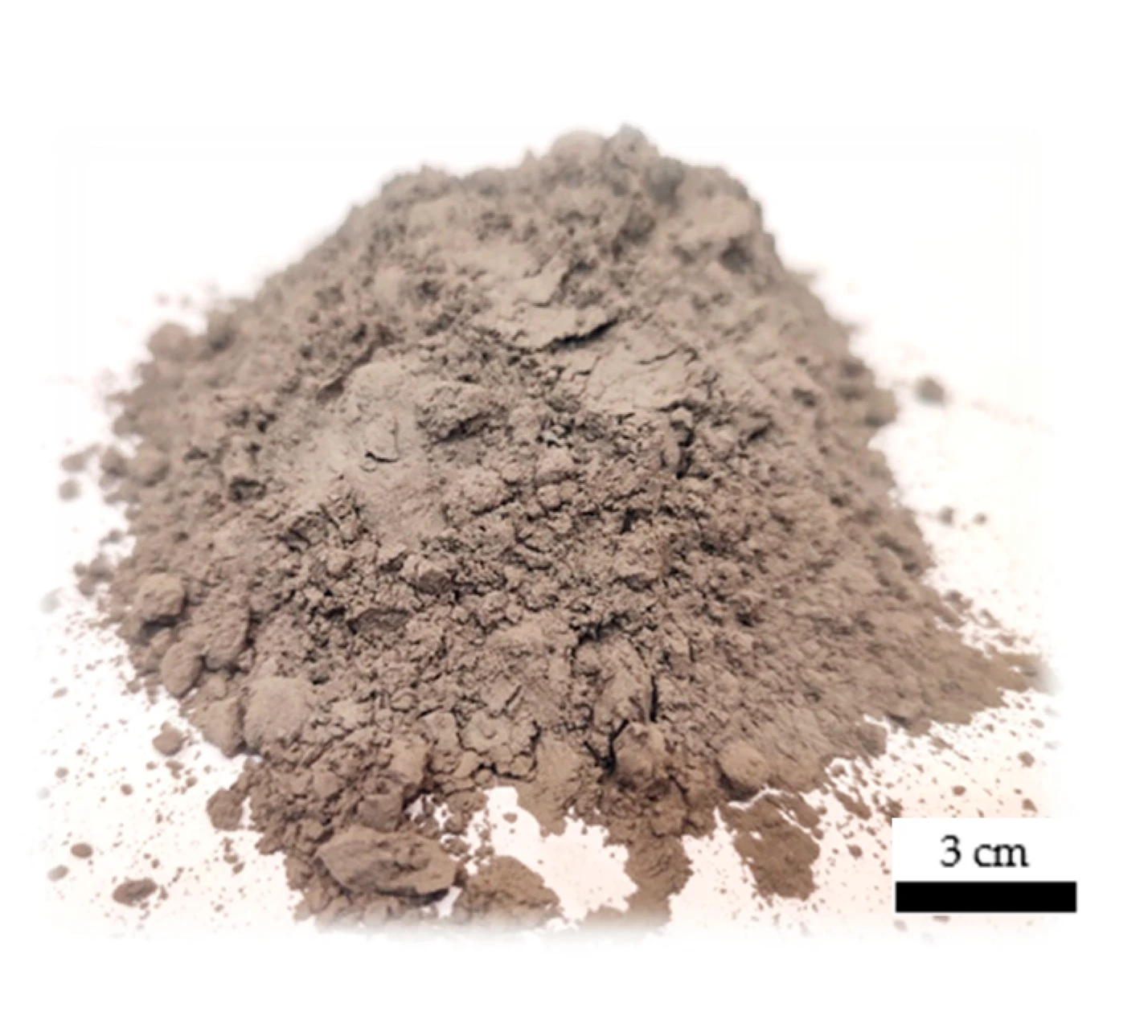
XTO GROUP INC is studying this sourcing market and coordinates international sourcing and trade requirements only. This article is not an offer, inventory list or agronomic prescription. No stock, contracted supplier, price, country of origin or existing export program is confirmed. No carbon credit or crop result is guaranteed.
Basalt rock: raw material that can be milled into agricultural rock dust
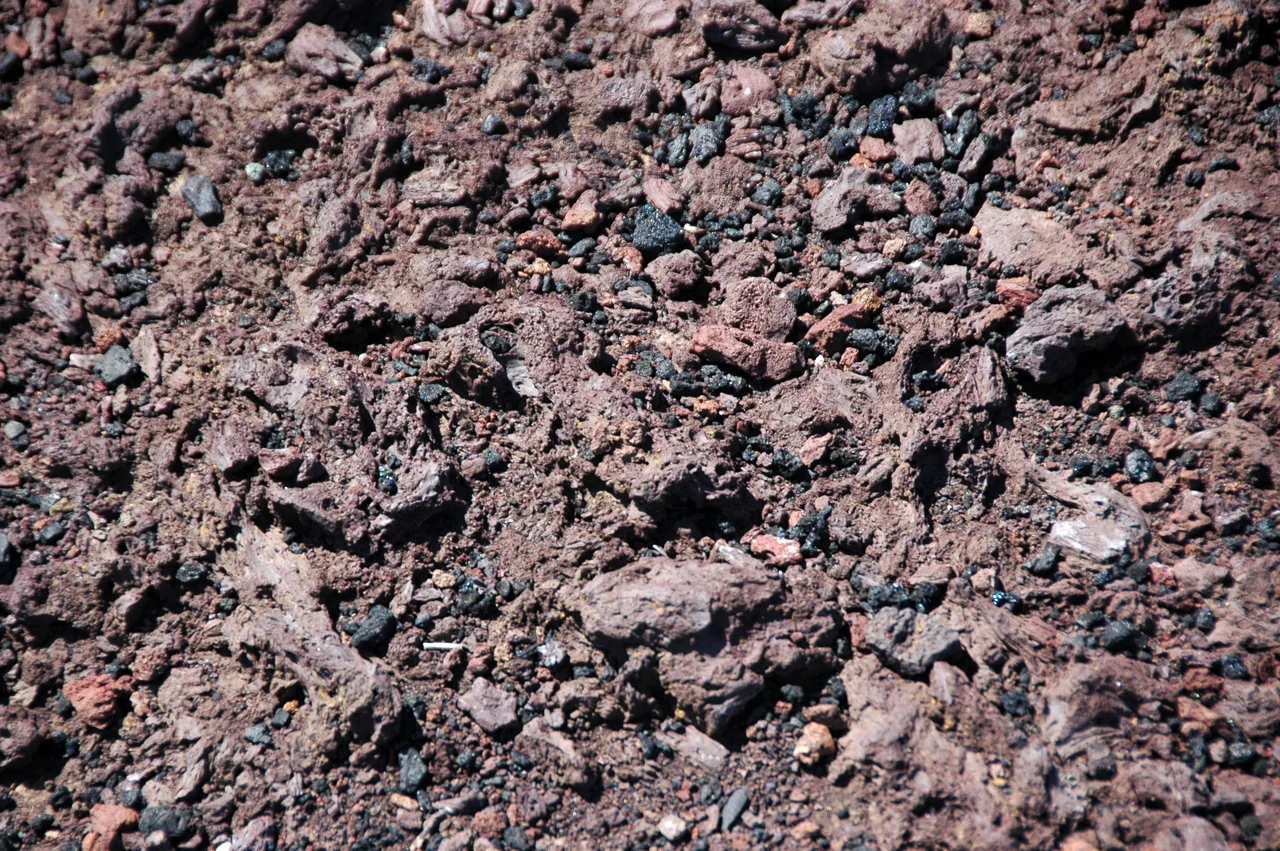
Geological reference in Idaho, not an XTO source, lot or agricultural application. Agricultural suitability requires mineralogical, chemical and safety assessment.
James St. John · Wikimedia Commons · Flickr · CC BY 2.0. Resized and converted to WebP; no crop. No endorsement implied.
1. A mineral amendment—not conventional NPK fertilizer
Basalt is a volcanic rock with variable mineralogy. When finely ground, its minerals may weather slowly and release calcium, magnesium, potassium and trace elements, depending on the composition of the actual material. Total elemental content is not the same as plant-available nutrients; a chemical assay alone does not predict nutrient release during a growing season.
Soil remineralization describes adding mineral material to soil. It does not demonstrate that a soil is deficient or that the amendment will improve production. Basalt dust is not a substitute for a balanced nitrogen, phosphorus and potassium program. Compare it with the crop’s soil-test-based nutrient plan, rather than treating a rock powder as an equivalent soluble fertilizer.
Remineralizing soils? The agricultural usage of silicate rock powders: A review
2. Potential benefits depend on the field
The review of silicate rock powders identifies potential nutrient contributions, but also variable outcomes across trials. Field research in maize/soybean systems and a temperate oat study reported benefits under particular experimental conditions. Those findings are not a guarantee for another feedstock, farm, crop or season.
Weathering and crop response depend on particle-size distribution, mineralogy, soil pH, moisture, climate, dose, soil properties and crop demand. Finer grinding can increase reactive surface area, but also processing cost and airborne dust. Basalt must not be presented as a rapid pH correction, a pest treatment or a guaranteed yield enhancer.
Potential evaluation settings include cereal, horticultural and perennial systems where a qualified agronomist identifies a plausible mineral need. A crop name alone does not establish suitability. Consider existing fertility, salinity, drainage and the crop’s sensitivity before any application.
Remineralizing soils? The agricultural usage of silicate rock powders: A reviewEnhanced weathering in the US Corn Belt delivers carbon removal with agronomic benefitsInitial agronomic benefits of enhanced weathering using basalt: A study of spring oat in a temperate climate
3. Test both the soil and the offered product
Begin with representative soil sampling and a qualified laboratory: pH, texture, organic matter, nutrient status and other locally relevant indicators. Agree sampling depth, locations and analytical methods with an agronomist. Retain baseline results so later measurements are comparable.
For the product, request mineralogical identification, a chemical composition report and a particle-size distribution—not merely the word ‘fine’. Specify the sampling method, laboratory, units and test methods. Screen potentially toxic elements, including nickel, chromium, cadmium, lead and arsenic as appropriate to geology and local regulation. Assess total concentrations, relevant leachability and cumulative loading; there is no universal acceptance threshold supplied here.
Request an SDS and information about respirable dust and crystalline silica. Basalt composition varies: do not assume every powder is silica-free or safe to breathe. Representative lot samples and an independently checked COA support assessment but do not replace field evidence or destination-country compliance.
Potential accumulation of toxic trace elements in soils during enhanced rock weatheringEnhanced Rock Weathering for Carbon Removal—Monitoring and Mitigating Potential Environmental Impacts on Agricultural LandOSHA — Respirable crystalline silica
4. Apply cautiously and establish a control plot
A qualified agronomist should set a locally justified trial rate, application method and monitoring plan; this guide prescribes no universal dose. Use a comparable untreated control and, where feasible, replicated plots with the same crop, fertility program and management. Record the actual material, rate, weather, dates and application conditions.
Track soil and plant indicators, measured yield and costs over a suitable timeframe. Check for adverse effects as well as benefits. A single observation without a control cannot establish causation. Do not remove the existing fertilizer program simply to assume the powder will replace it.
Limit dust generation and drift; follow the SDS, local occupational rules and equipment instructions. Use suitable handling controls and respiratory protection determined by a competent risk assessment. Avoid windy spreading, protect workers and nearby people, and prevent runoff into waterways. A visually dust-free site is not proof of safe exposure.
Enhanced Rock Weathering for Carbon Removal—Monitoring and Mitigating Potential Environmental Impacts on Agricultural LandOSHA — Respirable crystalline silica
5. Enhanced weathering is research—not assured carbon credits
Silicate weathering can consume carbon dioxide through reactions that may form dissolved bicarbonate. Enhanced rock weathering is being studied as a carbon-removal approach, alongside possible agronomic effects. A nutrient response does not by itself prove net carbon removal.
Quantification requires an appropriate monitoring, reporting and verification method and consideration of grinding, transport, spreading emissions, reaction pathways and long-term fate. Results are site-specific and carry uncertainty. This article offers no certified CO₂ capture, tradable credits or guaranteed carbon revenue.
Enhanced weathering in the US Corn Belt delivers carbon removal with agronomic benefitsEnhanced Rock Weathering for Carbon Removal—Monitoring and Mitigating Potential Environmental Impacts on Agricultural Land
6. Build a verifiable B2B requirement
Buyers should state intended use, soil/crop context, destination rules, required analysis, trial quantity and expected program volume. Suppliers should identify the proposed source and processing site, traceability, documented capabilities and test evidence. XTO is in market-study mode; supplier qualification and commercial feasibility remain to be established.
Request a technical data sheet, representative sample, lot-specific COA, particle-size distribution, SDS and origin/traceability evidence. Big bags, sacks or bulk are packaging options to investigate, subject to the actual offer. Minimum order, loading point, port and lead time require confirmation; no origin in Venezuela, Peru, the United States or elsewhere is represented as confirmed.
A proposed FOB or CIF quote under Incoterms® 2020 must name the port and allocate costs and responsibilities correctly; those terms apply to sea or inland-waterway transport, not every transport mode. CIF does not mean all destination charges are included. Select an appropriate term with trade advice and written agreement. Compare delivered transport, handling and application costs per hectare only after real price, trial rate and logistics data are available.
Practical buyer and supplier checklist
- 01Crop, soil analysis, agronomist’s objective and proposed controlled trial.
- 02Actual source, producer/processor identity and traceable lot/sample.
- 03Mineralogy, chemistry, particle-size distribution and relevant nutrient availability evidence.
- 04Potentially toxic element testing, SDS and respirable dust/crystalline silica assessment.
- 05Required destination compliance, laboratory methods and lot-specific COA.
- 06Trial quantity, estimated volume, packaging, MOQ, named port/point and requested date—subject to confirmation.
- 07Appropriate Incoterm 2020, cost responsibilities and real delivered/application cost data.
- 08Measured trial results, control plot, adverse-effect monitoring and no assumed carbon revenue.
Questions before buying basalt dust
Can basalt replace NPK fertilizer?
No automatic replacement is established. Assess mineral release and crop needs within a soil-test-based fertility plan with a qualified agronomist.
Is there a universal application dose?
No. A locally justified trial depends on the product, soil, climate and crop; use a control plot and agronomic advice.
Does XTO have basalt dust available?
No availability is confirmed here. XTO is studying the market and accepts buyer requirements and supplier capability information for review.
Does applying basalt guarantee carbon credits?
No. Enhanced weathering is an active research area; net removal and credit eligibility require specific measurement and verification, not an assumption.
Research and safety references
- Remineralizing soils? The agricultural usage of silicate rock powders: A review
- Enhanced weathering in the US Corn Belt delivers carbon removal with agronomic benefits
- Initial agronomic benefits of enhanced weathering using basalt: A study of spring oat in a temperate climate
- Potential accumulation of toxic trace elements in soils during enhanced rock weathering
- Enhanced Rock Weathering for Carbon Removal—Monitoring and Mitigating Potential Environmental Impacts on Agricultural Land
- OSHA — Respirable crystalline silica